From the ground up, RHA, local organizations, and volunteers are working to make the Budd Lake watershed a cleaner and healthier place.
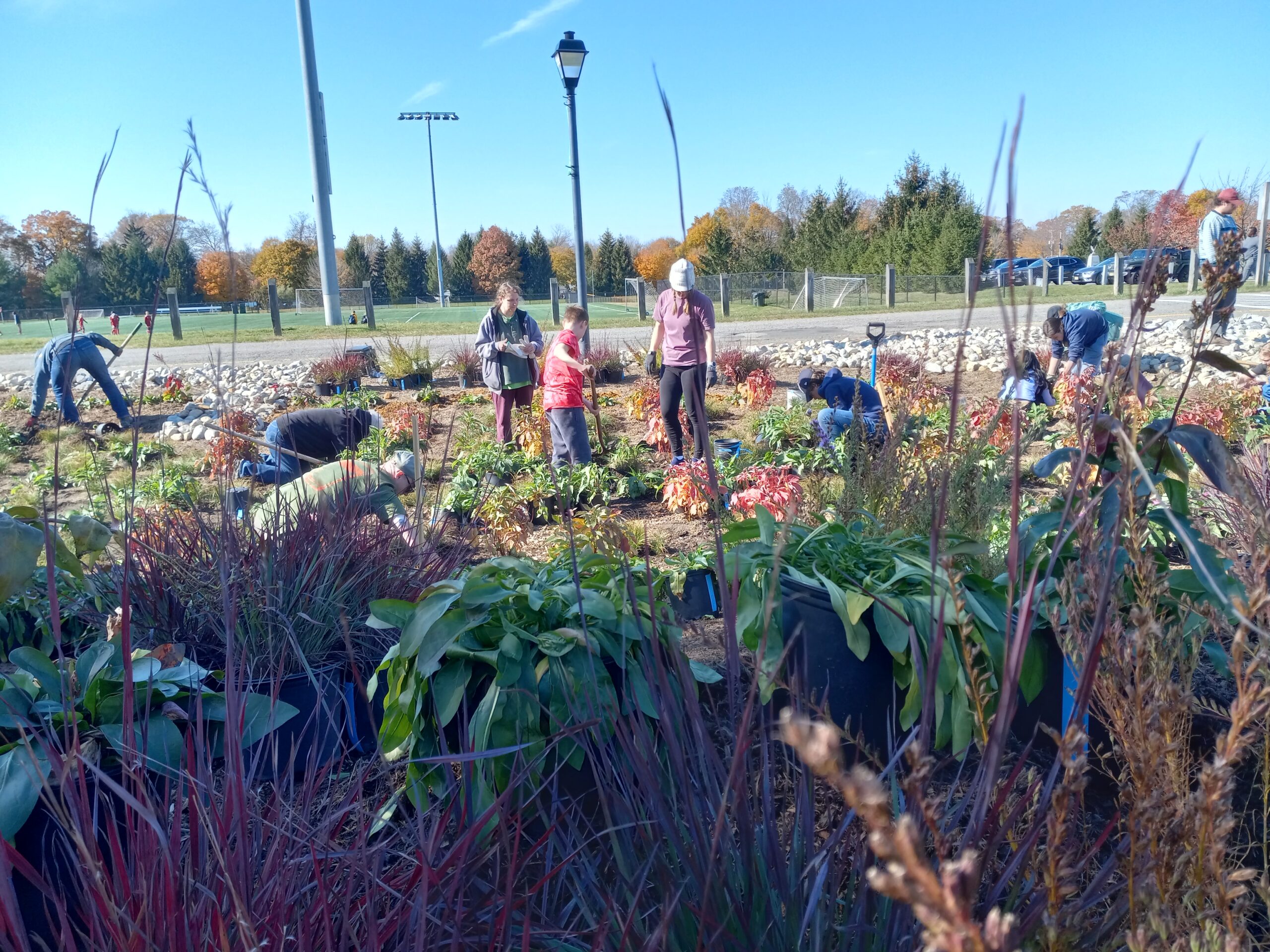
In November, three rain gardens were built in neighborhoods surrounding New Jersey’s largest natural lake. Filled with native plants, the new gardens are designed to capture stormwater runoff and filter out pollutants like fertilizers, road salt, and motor oil. At the same time, they will help recharge critical groundwater supplies.
The largest of the three rain gardens, at 1,400 square feet, was built at the township’s Turkey Brook Park off Flanders Road. A group of 20 volunteers planted hundreds of dogwood trees, native grasses, and perennial flowering plants in the park. Two smaller gardens, at about 100 square feet each, were built on the grounds of the Abiding Peace Lutheran Church on Route 46 and at the Pax Amicus Castle Theatre on Lake Shore Road.
 The three rain gardens are part of an ongoing effort to implement the “Budd Lake Watershed Restoration and Protection Plan” advanced by RHA. Adopted in 2024, the Budd Lake plan provides a blueprint for restoring the health of the lake and its tributaries.
RHA’s Tracy Gordon, outreach and advocacy coordinator, discovered that the NJ Landscape Makeover Program* was a funding source for covering most of the cost of building rain gardens. The Budd Lake project qualified, and the landscape makeover grants paid for engineering and design work, the excavation of the rain garden plots, and the purchase of native plants. The community needed only to provide volunteer labor to get the plants in the ground. Dylan Medici, Director of Outreach and Education at the NJ Highlands Coalition, was the project manager.
Getting rain gardens established is a major win in advancing the Budd Lake restoration plan, and we hope that more “green infrastructure” will be built in the Budd Lake watershed. To learn more about the Budd Lake Watershed Restoration and Protection Plan, click here. For more information about the NJ Landscape Makeover Program, click here.
*The National Fish and Wildlife Foundation, the William Penn Foundation, and the New Jersey Department of Environmental Protection provided funding for the NJ Landscape Makeover Program. Grants were distributed through the Rutgers University Water Resource Center and the nonprofit Pinelands Preservation Alliance.