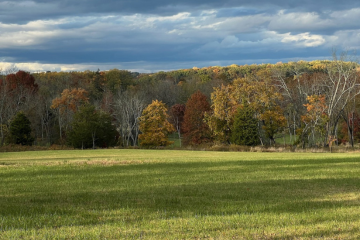
Imagine this: It’s early spring, there’s a chilly bite in the air, but the sun has finally broken through. You decide to enjoy the day with a walk to your favorite spot along the Raritan River.
As you observe nature around you— skunk cabbages emerging, animal tracks on the path, migratory birds returning—you notice some interesting rocks at the stream’s edge. When you reach into the cold water to pick one up, something darts out from the rock’s base. What was that?
Kneeling closer, you notice a tiny, translucent filament — the tail of a snake-like creature slipping beneath another rock for shelter. You’re curious. You pick up the rock and see the creature in all its glory: a writhing, animated glass noodle! It’s shorter than your pinky finger and as thin as the spaghetti you had for dinner last night. It has two tiny, jet-black eyes; you can even see its tiny heartbeat.
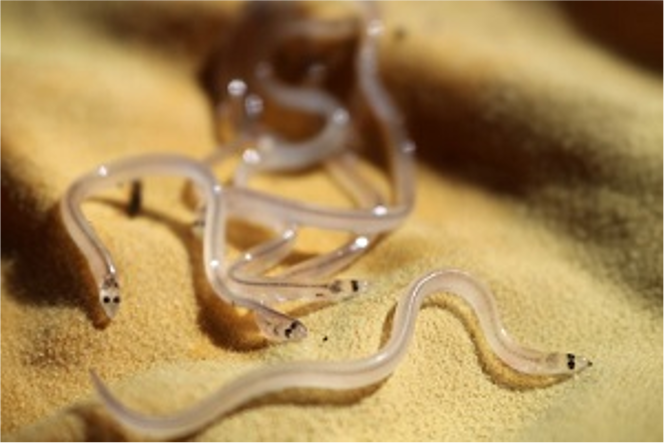
Glass eels. Picture credit: Sarah Mount, NYSDEC.
How lucky you are – it’s a glass eel! Glass eels are the juvenile stage of the American eel, a fascinating fish that is born in the ocean, spends most of its life in freshwater, and returns to saltwater to reproduce at the end of its life. American eels are native to the rivers of the East Coasts of North and South America.
After a thousand-mile journey from their spawning grounds in the Sargasso Sea near Bermuda, one-year-old glass eels arrive at our coast in early spring. These asexual juveniles swim up the NY-NJ Harbor Estuary into the Raritan and Hudson rivers, migrating upstream to find suitable freshwater habitats.
If you’re in the right place at the right time, you may glimpse a phenomenon known as eel braids, huge swaths of glass eels swimming together upstream from brackish to freshwater. Migrating birds and resident fish, hungry from the cold winter, have learned to capitalize on eel migration as a food source.
Glass eels don’t stay transparent for long. As they migrate, they develop dark pigments in their skin to blend into their new environment. Once they find a suitable habitat – usually rocky-bottomed streams with an abundance of their favorite food, macroinvertebrates – they settle in.
A year from now, the surviving eels from this year’s migration will have developed into “elvers”. At this stage, they are usually about three inches long, dark brown or gray, and thicker than their juvenile, glassy counterparts. In a few more years, when they reach about six inches, they will be known as “yellow” eels.
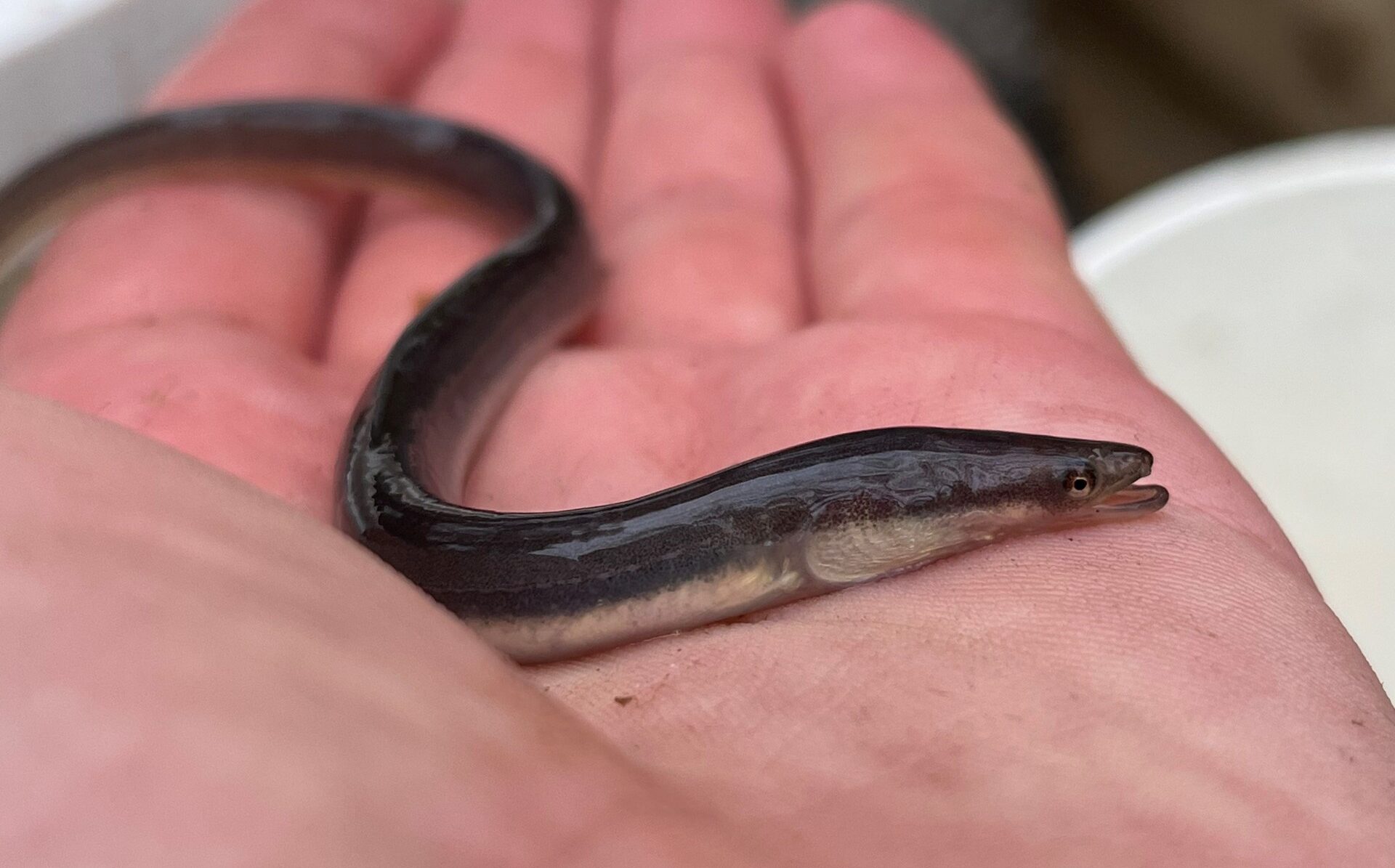
Elver. Picture credit: Benjamin Harris
It will take many more years for the eels to reach reproductive age and develop genders. Males mature first and usually start their long journey back to the Sargasso Sea in late fall when they’re about 10-12 years old. At this stage, they are called silver eels because of the bronze-silver coloration they develop to blend in with the shimmering waters of the Atlantic Ocean.
Female eels remain in their freshwater habitats longer than males, often for 15 to 25 years. Their reproductive maturity develops more slowly because their bodies need to accumulate enough fat to produce six to eight million tiny eggs, all of which are released into the Sargasso Sea during the spawning season.
Eels are remarkable creatures, but they face many threats. Dams that block migration routes, water pollution, and declining ecosystems have harmed their populations. Eels are a keystone species, affecting the entire food web and providing vital ecological services at every stage of their life cycle.
Eels are often viewed as slimy and creepy. But truly, they are complex, misunderstood, and fascinating creatures that deserve our respect. This spring, take a walk along the Raritan River or one of our beautiful tributary streams. If you’re patient and persistent, you might be lucky enough to see a glass eel or even a whole braid of migrating eels!