The Algae Problem Isn’t Really About Algae
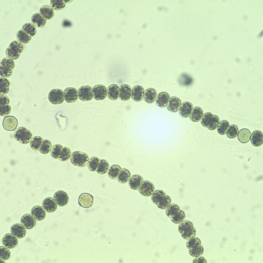
Dolichospermum sp. filamentous colony. Dolichospermum is a genus of cyanobacteria with many species that sometimes produce toxins. Photo: Benjamin Harris, taken from a lake in New York.
It’s that time of year: we’re all heading out to swim, fish, kayak, and enjoy the serenity of the Raritan River and its winding, wondrous tributaries. But it’s also the time of year when we see one of the clearest signs of how our actions affect our waterways: algae overgrowth.
Before I get into this, I want you to know that I’m a true lover of algae. Algae are incredible creatures with extraordinary adaptations and life histories that deserve our respect. They produce much of the oxygen we breathe, support aquatic food webs, and some even grow within the egg masses of amphibians to oxygenate the young. Their presence is not a problem. Their overgrowth can be.
How Overgrowth Happens
Just like the plants in your gardens and lawns, algae respond enthusiastically to fertilizers. When we apply more fertilizer than our plants can use, the excess washes into groundwater and streams, where it becomes food for algae. They’ll keep growing until those nutrients are used up. Even then, some species have tricks that keep them going.
Cyanobacteria are especially ancient and remarkably adaptable. Many can “fix” atmospheric nitrogen, pulling this nutrient directly from the air when supplies in the water run low. In lakes and reservoirs, some species can even regulate their buoyancy, sinking at night to absorb nutrients, typically phosphorus, from the bottom before returning to the surface during the day for sunlight. These adaptations, among many others, make them incredibly successful competitors.
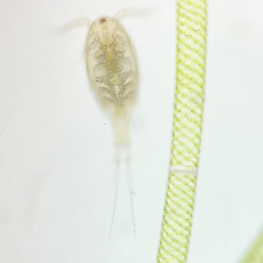
Copepod next to a Spirogyra sp. filamentous colony. Spirogyra is genus of charophyte algae (plant-like protist) that can grow in dense mats on the surface of small ponds. Copepods are a type of zooplankton (microscopic animals that consume or graze algae). Photo: Benjamin Harris, taken from a pond in New Jersey.
When Too Many Nutrients Tip the Balance
When excess nutrients accumulate in a waterbody, we get eutrophication, a process where nitrogen and phosphorus fuel excessive plant and algal growth. Eutrophication is actually a natural part of a lake’s life cycle, occurring slowly over thousands of years as leaves, soil, and other nutrient-rich organic matter accumulate. Unfortunately, our fertilizer use, stormwater runoff, and failing septic systems have dramatically accelerated the rate at which this process is occurring.
Initially, during eutrophication, increased algae growth boosts dissolved oxygen through photosynthesis and provides abundant food for grazing zooplankton and young fish. But eventually the bloom begins to die. Bacteria decompose the dead algae, consuming large amounts of dissolved oxygen in the process. The result can be hypoxic (low-oxygen) or even anoxic (oxygen-free) water, leading to fish kills, stressed aquatic life, and conditions that often favor cyanobacteria over other algae.
You’ve probably heard of the dead zone in the Gulf of Mexico. It formed through the same basic process: decades of nutrient runoff from agriculture throughout the Mississippi River watershed have fueled eutrophication, ultimately creating vast areas with too little oxygen to support most marine life.
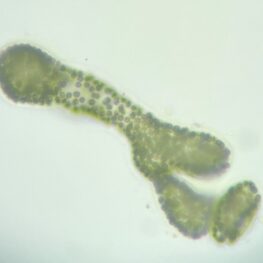
Microcystis aeruginosa colony. M. aeruginosa is a common, sometimes toxin-producing, species of cyanobacteria. Photo: Benjamin Harris, taken from a lake in New Jersey.
When we eutrophy our waters, we also increase the potential for harmful algal blooms (HABs). But it’s important to remember that not all algal blooms are harmful, and not all cyanobacterial blooms produce toxins. Many cyanobacteria can produce toxins, but they don’t always do so, and scientists are still working to understand exactly what triggers toxin production. In many cases, toxins become a greater concern when cells die and rupture (lyse), releasing those toxins into the surrounding water.
Treat the Cause, Not the Symptom
That brings us to management. Some approaches rely on chemicals or other treatments designed to suppress algae. While these methods can temporarily reduce a bloom, they typically rupture the algae cells, potentially releasing toxins, while disrupting the food web that depends on algae as its foundation. They also release nutrients back into the water, setting the stage for future blooms to develop. In this case, addressing the source of the problem is more effective than treating the symptom.
So, what’s the solution? Healthy watershed management.
First, reduce unnecessary fertilizer use. Better yet, compost nutrient-rich yard waste whenever possible. Even harvested overgrown aquatic plants or algae mats can become valuable compost, returning nutrients to gardens instead of waterways.
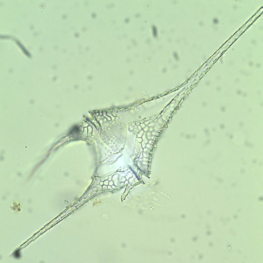
Ceratium sp. single cell. Ceratium is a mixotrophic dinoflagellate (protist), meaning it can photosynthesize for energy (autotrophic) but also consume other organisms (heterotrophic) when sunlight is limited. Photo: Benjamin Harris, taken from a lake in Pennsylvania.
Second, if you have a septic system, make sure it’s functioning properly. Failing or poorly maintained systems can release large amounts of nutrients—and bacteria—into groundwater, nearby streams, and lakes. Have your system inspected at least every three years and pumped every three to five years, or as recommended for your system and household. Conserve water to avoid overloading the system, and keep trees, vehicles, and structures away from the drainfield. Routine maintenance is one of the simplest ways to protect local water quality and prevent costly repairs.
My third recommendation—and do with it what you will—is to simply respect the algae. Their overgrowth and occasional toxicity are usually symptoms of our actions, not theirs. These organisms have existed for billions of years. We have them to thank for much of the oxygen in our atmosphere and for supporting the aquatic food webs that ultimately sustain fish, wildlife, and people.
Coexisting with Algae
We cannot villainize organisms for responding to the conditions we’ve created. Sure, they may sometimes be a nuisance and occasionally toxic, but more often than not, they’re quietly performing essential ecosystem services.
So, say “hello” to an algae bloom and thank algae for the oxygen you breathe. If you see a bloom that looks like bright green paint, pea soup, or thick surface scum, avoid contact and keep children and pets out of the water. Because harmful blooms can look different and appearance alone isn’t enough to confirm whether toxins are present, it’s best to err on the side of caution and report suspected harmful algal blooms to NJDEP. And before making drastic management decisions, remember that the best long-term solution isn’t fighting algae, it’s taking better care of the watershed that supports them.
-Benjamin Harris, Watershed Scientist, RHA