
Raritan Headwaters is combining local water quality research, community well testing, and statewide advocacy to better understand PFAS contamination and advance stronger protections for our drinking water.
PFAS, commonly known as “forever chemicals,” are being found in waterways across New Jersey, including here in the Raritan River watershed.
A new report from Environment New Jersey Research & Policy Center and Frontier Group found PFAS at 91% of the 86 locations tested statewide. Among them were sites along the North Branch of the Raritan River, Lamington River, and Millstone River—waterways that contribute to a drinking water supply serving approximately 1.8 million New Jersey residents downstream.
PFAS have been used for decades in products ranging from nonstick cookware and waterproof clothing to food packaging and firefighting foam. They persist in the environment, and exposure to certain PFAS has been linked to serious health concerns, including some cancers, developmental effects, and weakened immune responses.
For Raritan Headwaters Association (RHA), the findings reinforce the need to keep PFAS out of our water in the first place. We’re working on three fronts: advocating for stronger state regulations, helping private well owners access testing, and researching contamination throughout the Upper Raritan watershed.
Calling for Stronger Surface Water Protections in New Jersey
On October 14, RHA Executive Director Mara Tippett joined Doug O’Malley of Environment New Jersey, Elliott Ruga of the New Jersey Highlands Coalition, Dr. Robert Laumbach of Rutgers University, and Michael Pisauro of The Watershed Institute at a press conference in Manville calling for stronger statewide action to address PFAS pollution.
“We cannot protect New Jersey’s drinking water without protecting the rivers and streams that supply it,” said Tippett.
While New Jersey has made progress regulating PFAS in drinking water, the state has yet to establish surface water quality standards for these chemicals. Without these standards, NJDEP lacks an important regulatory tool to control PFAS pollution at its source.
Rather than relying primarily on expensive drinking water treatment, we need to prevent contamination before it reaches our water supplies. Surface water quality standards would provide a scientific basis for identifying impaired waterways, requiring pollution reductions, and setting enforceable limits on PFAS discharges from industrial facilities and wastewater treatment plants.
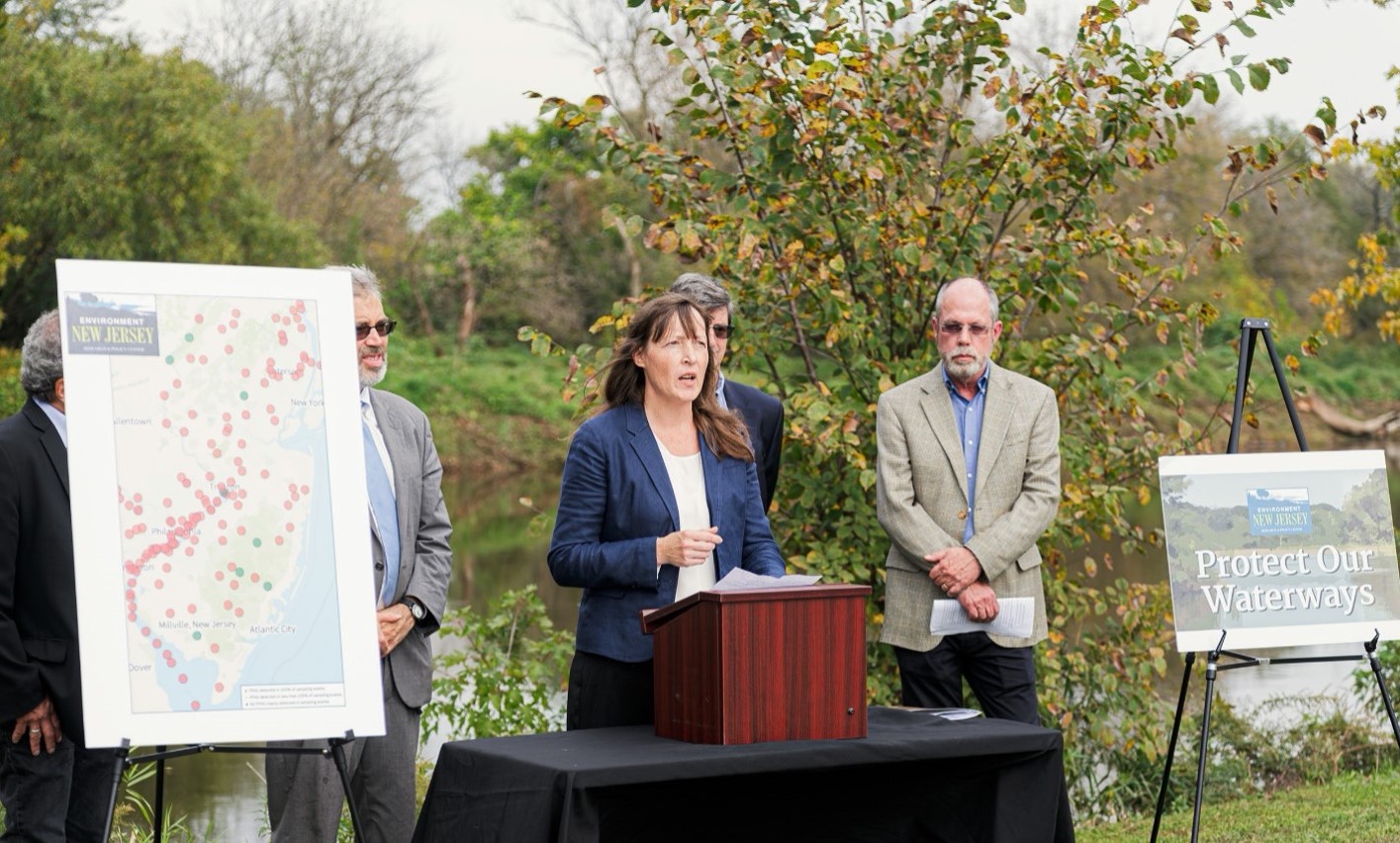
RHA Executive Director Mara Tippett joined Doug O’Malley of Environment New Jersey, Elliott Ruga of the New Jersey Highlands Coalition, Dr. Robert Laumbach of Rutgers University, and Michael Pisauro of The Watershed Institute at an October 14 press conference in Manville calling for stronger protections against PFAS pollution in New Jersey’s waterways.
NJDEP made substantial progress on proposed standards for PFOA, PFOS, and PFNA late in the Murphy administration, but the proposal expected before January 2026 was never published. RHA is joining Environment New Jersey and other partners in urging Governor Sherrill’s administration to move these long-awaited protections forward. The scientific groundwork is already in place.
Supporting Private Well Owners
Private well owners face a particular challenge with PFAS contamination. Unlike customers of public water systems, they are generally responsible for arranging and paying for their own testing and treatment. PFAS testing can be especially costly, leaving many homeowners unaware of potential contamination.
Findings from RHA’s longstanding Community Well Testing Program show why testing matters, and why state action is necessary. Between 2022 and 2025, RHA tested 697 private wells for PFAS, detecting these chemicals in 73% of the wells tested. More than half (53%) had concentrations exceeding federal drinking water standards for at least one regulated PFAS compound.
Although these results are not necessarily representative of all private wells in the watershed, they demonstrate the importance of testing, particularly for contaminants that cannot be seen, smelled, or tasted.
RHA helps homeowners access affordable testing, understand their results, and learn about treatment options when contamination is found.
These findings also show why state action is needed to make sure tests are accessible. On October 8, Tippett testified before the New Jersey Senate Environment and Energy Committee in support of Senate Bill S4468, legislation aimed at improving access to PFAS testing and assistance for private well owners. With an estimated 375,000 private wells across New Jersey, the need for greater support extends well beyond our watershed.
RHA worked with legislative staff to strengthen the bill. Our recommendations included financial assistance for lower-income households, a role for community-based organizations in delivering testing programs, certified laboratories, an interactive public map of testing information, and the use of PFAS settlement funds to help homeowners. We were pleased to see several of these recommendations incorporated into amendments. The committee unanimously advanced the bill on October 8.
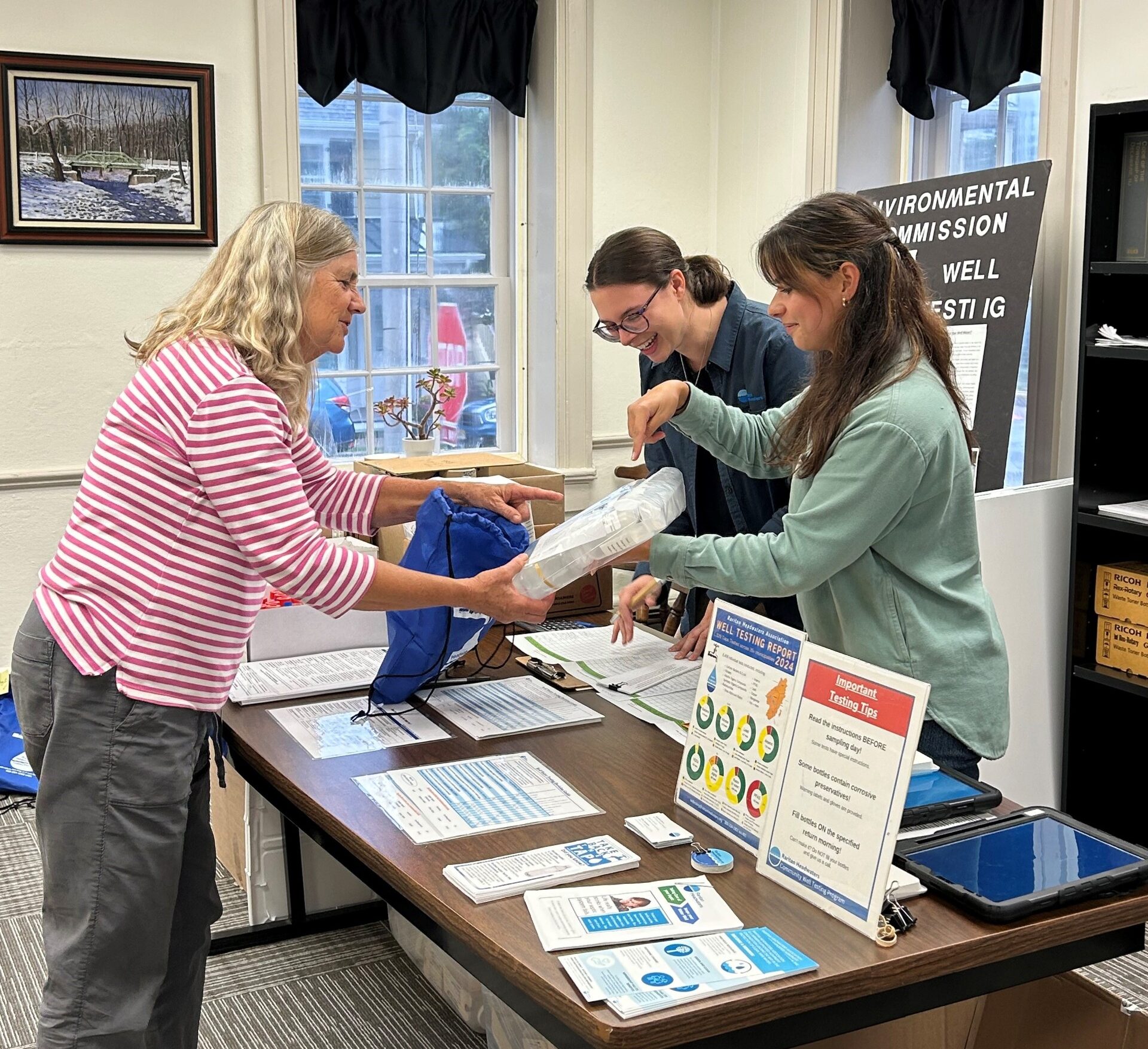
RHA staff members Samantha LaRocca and Rachel Garcia help a local resident obtain a PFAS testing kit at a Community Well Testing event. RHA’s program makes it easier for private well owners to understand what’s in their drinking water and take steps to protect their families.
RHA’s priority is making sure homeowners can access reliable testing, understand their results, and get the support they need when contamination is found.
Using Local Science to Support Statewide Action on PFAS
RHA’s advocacy is grounded in decades of water quality monitoring and research throughout the Upper Raritan watershed. Now, we’re expanding that work to better understand PFAS contamination in our rivers, streams, and lakes.
With funding from the New Jersey Water Supply Authority and American Water Charitable Foundation, RHA has conducted a PFAS study across ten subwatersheds of the Upper Raritan. This research will establish baseline conditions, identify areas that may warrant further investigation, and provide valuable information to NJDEP and regional water suppliers.
RHA is also investigating PFAS in Budd Lake, the headwaters of the South Branch Raritan River, with funding from the New Jersey Highlands Council. The study builds on our work with Mount Olive Township and the Rutgers Cooperative Extension Water Resources Program to address stormwater pollution and harmful algal blooms.
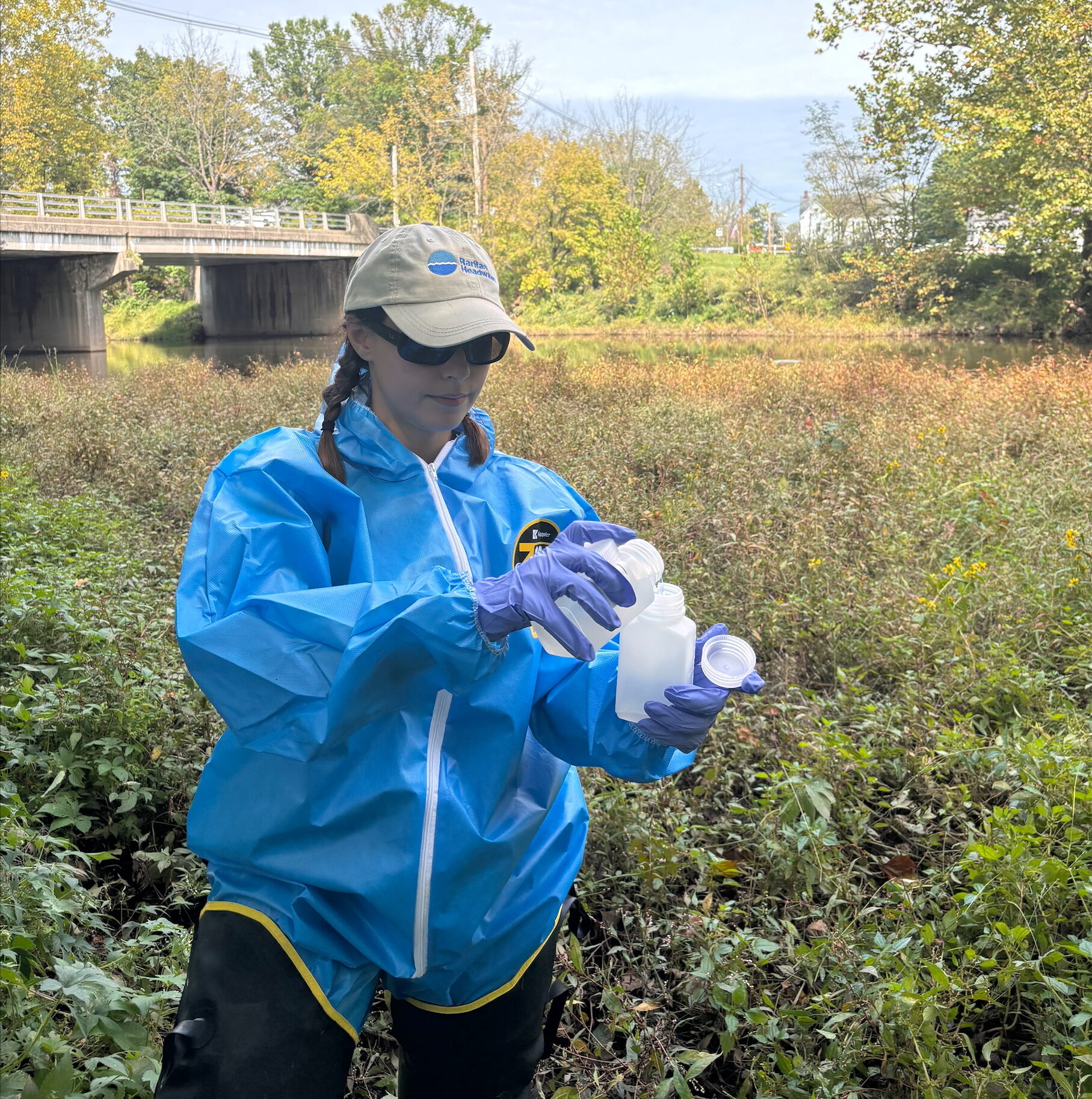
RHA Watershed Scientist Rachel Garcia collects water samples for PFAS analysis as part of RHA’s ongoing efforts to better understand contamination in the Upper Raritan watershed and inform stronger water quality protections.
Sampling for both studies is complete, and analysis is underway. As New Jersey considers PFAS surface water standards, local data like this can help pinpoint pollution concerns and inform regulatory decisions, just as RHA’s long-term monitoring has already helped NJDEP identify impaired waterways.
Reducing PFAS at the Source
Preventing future contamination requires reducing the use and release of PFAS. PFAS can enter the environment through manufacturing discharges, wastewater, landfills, firefighting foam, and other pathways.
New Jersey took an important step in January 2026 with the signing of the Protecting Against Forever Chemicals Act. Beginning in 2028, the law will restrict intentionally added PFAS in certain consumer products, establish cookware labeling requirements, and support research and public education.
These measures are important, but addressing PFAS already present in our environment will also require continued monitoring, stronger pollution controls, and cooperation among government agencies, manufacturers, water suppliers, and local communities.
What Can Residents Do?
While PFAS contamination requires action from government and industry, there are steps residents can take to reduce their exposure and help protect water quality.
- Test your drinking water. If you rely on a private well, consider testing for PFAS. Visit www.testmywell.org to learn about RHA’s Community Well Testing Program. If you receive public water, review your utility’s water quality information.
- Consider an appropriate water filter. Activated carbon and reverse osmosis systems can reduce certain PFAS. Look for filters independently certified under NSF/ANSI 53 or 58 specifically for PFAS reduction and follow maintenance instructions. Boiling water does not remove PFAS.
- Choose products without intentionally added PFAS. Consider alternatives to stain-resistant fabrics, certain waterproof products, and nonstick cookware. Stainless steel and cast-iron cookware are good alternatives.
- Check fish consumption advisories. PFAS can accumulate in fish. Review NJDEP’s fish consumption advisories before eating locally caught fish.
- Stay informed. Follow developments in New Jersey’s PFAS surface water standards and private well testing legislation and learn how these policies affect your community.
Individual actions can help reduce exposure, but they are not a substitute for stronger pollution prevention policies. We need to address contamination at its source, not simply ask residents to manage the consequences.
Continuing the Work to Protect Clean Water
There is still much to learn about where PFAS in New Jersey come from and how concentrations change over time.
RHA will continue working with residents, scientists, water suppliers, policymakers, and conservation partners on two immediate priorities: advancing PFAS surface water quality standards and making well testing more accessible and affordable.
Both are important. We need stronger protections to prevent PFAS from entering our waterways while ensuring that homeowners have the information and resources they need to understand and address contamination in their drinking water.
Protecting clean drinking water starts long before it reaches our taps. It starts with protecting the rivers, streams, and groundwater that supply that water—and with policies that prevent pollution in the first place.
Learn More
RHA Community Well Testing Program: www.testmywell.org
Environment New Jersey: New Report: Toxic PFAS Contaminates 91% of Tested NJ Waterways
New Jersey Legislature: Senate Bill S4468
NJDEP: PFAS Actions and Initiatives
EPA: Reducing PFAS in Your Drinking Water with a Home Filter