
As New Jersey celebrates Climate Week, Raritan Headwaters Association (RHA) is looking back at more than a decade of work to make our watershed, and the drinking water it provides, more resilient to a changing climate.
The challenges are all too familiar. Intense rainstorms send more runoff pouring across roads, farms and developed land, flooding homes and businesses, washing out roads and bridges, and leaving towns with costly repairs. That same runoff carries sediment and pollutants into our streams and erodes their banks. In between storms, longer dry periods strain streams, groundwater and reservoirs, and warmer conditions put added stress on cold-water streams, forests and wildlife.
At RHA, climate resilience isn’t a separate program. It’s built into nearly everything we do.
A roadmap for resilience
In 2015, graduate students from Columbia University’s School of International and Public Affairs completed Climate Change Strategies for the Raritan Headwaters Association, a pro bono project examining how RHA could incorporate climate change into its long-term conservation strategy.
The report highlighted threats that sound remarkably current today: drought, flooding and water pollution. Among its recommendations were restoring wetlands, repairing and expanding riparian buffers, and improving stormwater management.
A decade later, many of those core priorities continue to drive our efforts today.
Restoring the landscape that protects our water
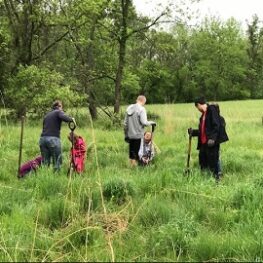
One of the most effective ways to build climate resilience is also one of the simplest: give water more places to slow down, soak into the ground, and move naturally through the landscape.
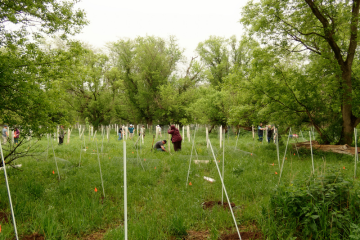
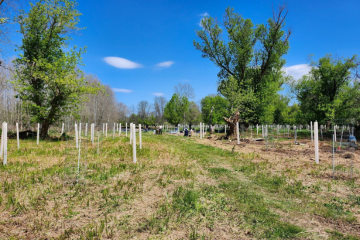
Through our Woods & Waterways program, RHA and our partners are restoring stream corridors throughout the Upper Raritan watershed. By the end of 2026, we will have planted nearly 10,000 native trees and shrubs, restoring 44 acres along five miles of rivers and streams, with an average buffer width of 140 feet. The work spans 23 project sites, 18 landowners, and 13 different waterbodies.
These growing riparian forests stabilize streambanks, filter runoff, shade and cool streams, improve wildlife habitat, and help soils absorb and retain rainfall. They are especially valuable as the watershed experiences both more intense storms and longer dry periods.
We are also restoring rivers themselves. RHA is advancing dam removal and river restoration projects throughout the watershed, including work at Rockafellows Mills, Cole’s Mill, Nunn’s Mill and other sites along the South Branch. Reconnecting rivers can restore natural sediment movement, improve fish passage and aquatic habitat, and allow waterways to respond more naturally to changing flows.
Wetlands, floodplains, forests and stream corridors all have a role to play. Protecting and restoring them can reduce downstream flooding while safeguarding water quality.
Protecting the land that protects our water
Climate resilience also depends on keeping important parts of the landscape intact.
The Upper Raritan watershed encompasses 470 square miles of headwaters, forests, farms, wetlands and communities across Hunterdon, Somerset and Morris counties. Water originating here ultimately contributes to drinking-water supplies serving approximately 1.8 million New Jersey residents.
Land preservation has been central to RHA’s work for decades. RHA currently owns and manages more than 450 acres of preserves and holds conservation easements on 915 additional acres.
Our impact extends well beyond land held directly by RHA. Over the years, we have worked with municipalities, land trusts, state and county agencies, landowners and other conservation partners to help preserve thousands of additional acres throughout the watershed.
These conserved lands absorb rainfall, slow runoff, reduce erosion, protect stream buffers, recharge groundwater, and allow floodwaters to spread across the landscape. As New Jersey faces both heavier rainfall and prolonged drought, keeping these areas protected is even more important for long-term source-water protection.
Following the science
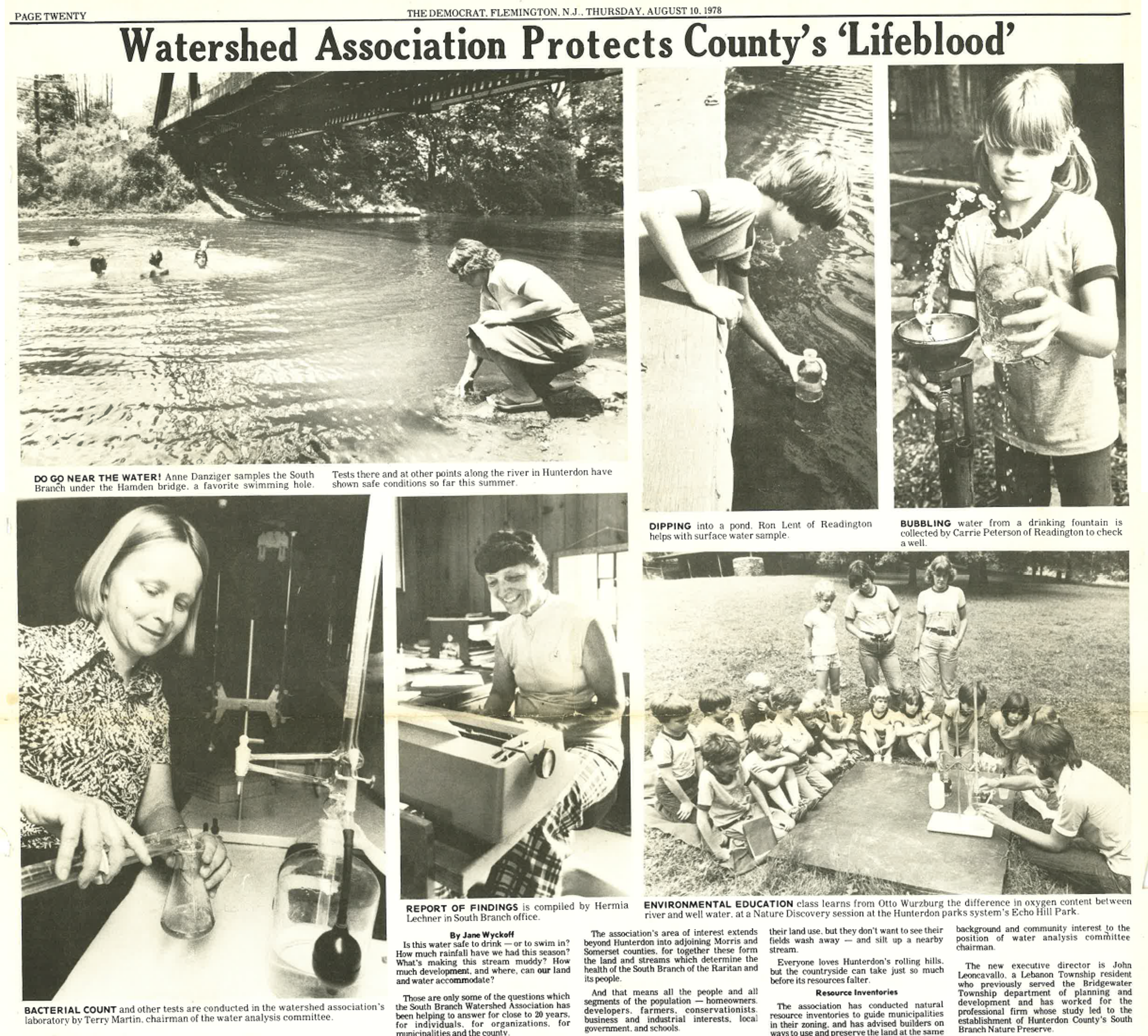
Protecting Water Resources in the Upper Raritan Since 1959. Newspaper clipping from The Democrat, August 10, 1978 Celebrates Water Monitoring Efforts of South Branch Watershed Association, now Raritan Headwaters
We also need to understand how the watershed is changing.
RHA has been monitoring local waterways since the 1960s, building a long record of observation and science that continues today. Our scientists and volunteers now collect biological, chemical, habitat and temperature data across more than 80 stream sites throughout the watershed.
In 2025, RHA’s laboratory earned certification from the New Jersey Department of Environmental Protection for temperature, conductivity, pH, and dissolved oxygen analysis, strengthening the ability of our data to support regulatory and water-resource decisions.
That long-term commitment to monitoring is especially valuable as weather patterns become less predictable. The data help us identify stressed waterways, determine where restoration is needed most, and measure whether that work is making a difference.
They also contribute to decisions beyond RHA. Our monitoring data have helped identify impaired waterways under the Clean Water Act and continue to inform state and local water-quality planning efforts.
Planning for drought and downpours
RHA has also worked at the watershed scale, recognizing that many water problems cannot be solved on a property-by-property or municipality-by-municipality basis.
With Rutgers University, the New Jersey Highlands Council, New Jersey Water Supply Authority, NJDEP, municipalities and other partners, RHA has advanced watershed planning focused on stormwater, nonpoint-source pollution, green infrastructure, groundwater recharge and protection of forests and stream corridors.
That broader approach includes RHA’s work to explore a federal Partnership Wild and Scenic River designation for portions of the Upper Raritan. The effort aims to recognize and deepen understanding of the watershed’s outstanding natural, recreational and cultural resources while bringing municipalities and partners together to secure their long-term protection.
Through the Headwaters to Bay initiative, RHA is also working with partners across the 1,100-square-mile Raritan River basin to better connect science, land conservation, restoration, and community action: from the smallest headwater streams to Raritan Bay.
Water does not stop at municipal or county boundaries, and neither can the work to protect it.
New threats require new science
The challenges facing our water continue to evolve.
RHA has expanded its work on emerging contaminants, including PFAS in private wells and surface waters, harmful algal blooms in reservoirs and lakes, and the effects of drought and extreme rainfall on water quality.
Our Community Well Testing Program helps residents better understand the quality of their drinking water, while our scientific partnerships are helping researchers and water managers build a clearer picture of conditions across the watershed.
Source-water protection means continuing to address long-standing threats while also paying attention to problems that were barely on the radar a decade ago.
 Working with communities
Many of the decisions that shape the future of our water are made locally.
RHA works with municipalities throughout the watershed on stormwater management, land-use planning, natural-resource protection, and other issues that affect how water moves through the landscape. We provide data, mapping, technical information, and practical guidance that communities can use when making decisions about development, conservation, and infrastructure.
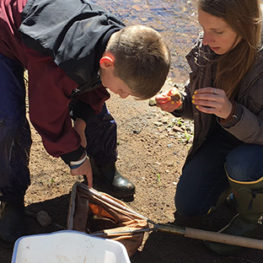
Education is part of that work, too. Through school programs, Nature Day Camp, the Environmental Leaders Academy, volunteer restoration projects and our training of citizen-science stream monitors, RHA helps people understand the connection between the land around them and the water flowing through it. Those trained volunteers also expand our ability to observe conditions across the watershed and contribute to the long-term record we use to track change.
RHA is also a community-based nonprofit partner in the Rutgers–New Brunswick Climate Change Learning Collaborative, which is part of a statewide initiative established by the New Jersey Department of Education to strengthen climate change education in New Jersey schools.
That connection matters. Long-term conservation depends not only on good science and sound policy but also on people who understand their watershed and are prepared to respond to the changes around them.
Seeing the Strategy Take Root
The 2015 Columbia project asked RHA to think of climate change not as a distant environmental problem but as something that should inform decisions about land, water and communities in the present.
More than a decade later, that thinking remains evident throughout our work.
It is in the trees taking root along a stream, the forest protected from development, the river being reconnected, citizen scientists collecting another year of data, the municipality improving how it manages stormwater, and the homeowner learning what is in their well water.
None of those efforts, by itself, makes a watershed resilient. Together, they make a meaningful difference.
During New Jersey Climate Week, we are taking stock of the progress made while recognizing how much remains to be done. A changing climate will continue to test our rivers, forests, groundwater, and communities.
For Raritan Headwaters, the work remains largely the same at its core: protect the places where water begins, understand what is changing, and work with people throughout the watershed to keep these resources healthy for the future.