Robert Lucas, RHA Restoration Coordinator
An ambitious goal of planting 10,000 native trees in the upper Raritan River watershed to help protect clean water has been achieved!
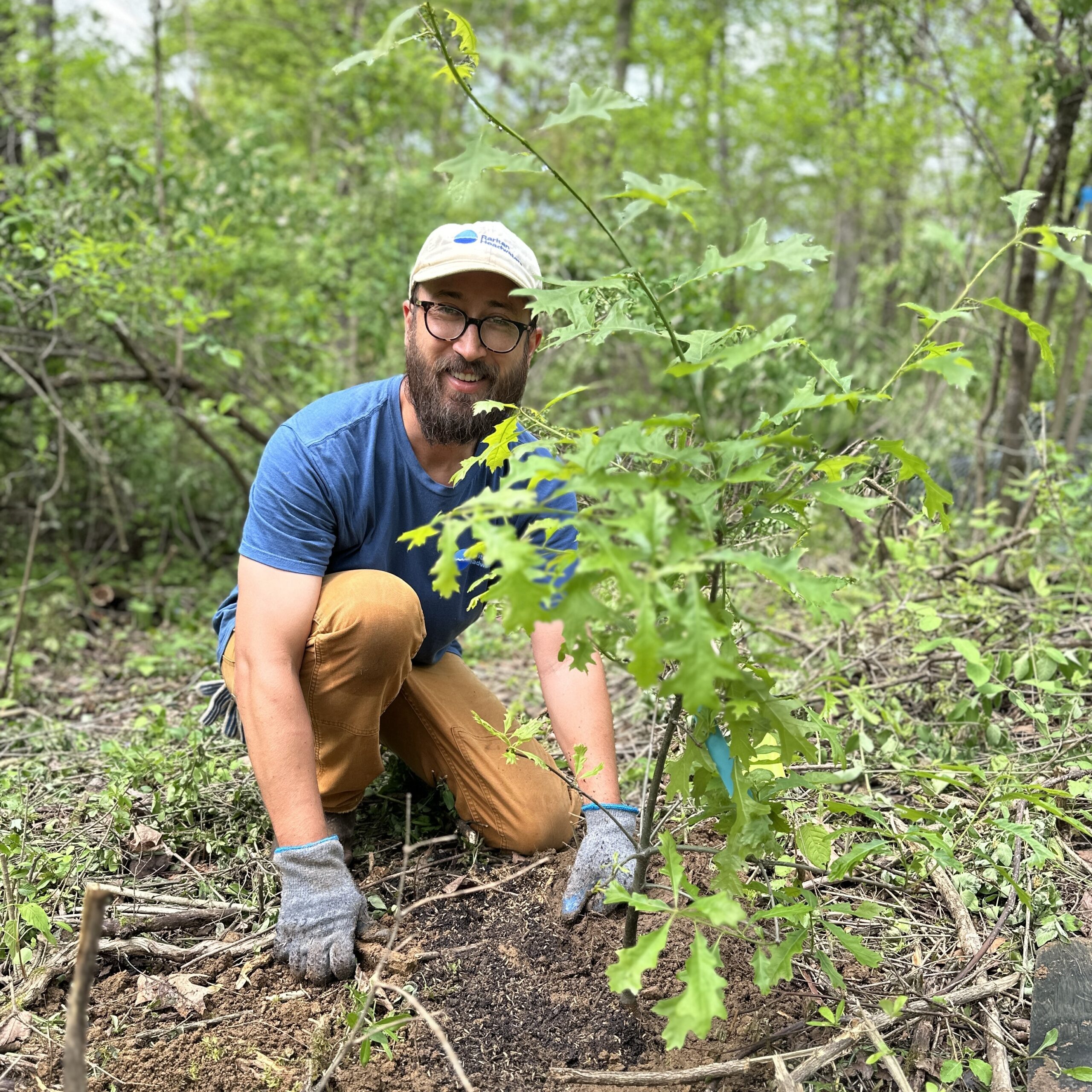
Raritan Headwaters planted its milestone 10,000th tree Thursday morning, Nov. 19, on property in Lebanon Borough along Rockaway Creek, a tributary of the South Branch of the Raritan River.
It was an exciting moment for Robert Lucas, RHA’s restoration coordinator, who has been leading the tree-planting effort. In his words, “Healthy forests protect clean water, and the trees we’ve spent years planting help keep streams cool, improve habitats for aquatic and terrestrial wildlife, and filter stormwater runoff.”
The 10,000th tree was a Northern Red Oak—New Jersey’s state tree—planted along with 749 other native trees and shrubs at the site.
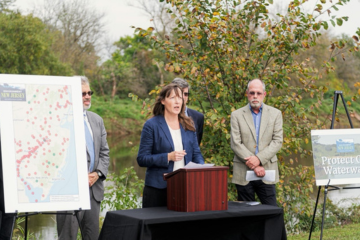
Representatives from the National Oceanic and Atmospheric Administration (NOAA), the U.S. Fish & Wildlife Service, and the New Jersey Department of Environmental Protection (NJDEP) attended the tree planting.
RHA’s planting of 10,000 native trees and shrubs took place at 23 locations—many of them parks, nature preserves, and public open spaces—throughout the 470-square-mile watershed, which covers 38 municipalities in Hunterdon, Somerset, and Morris counties.
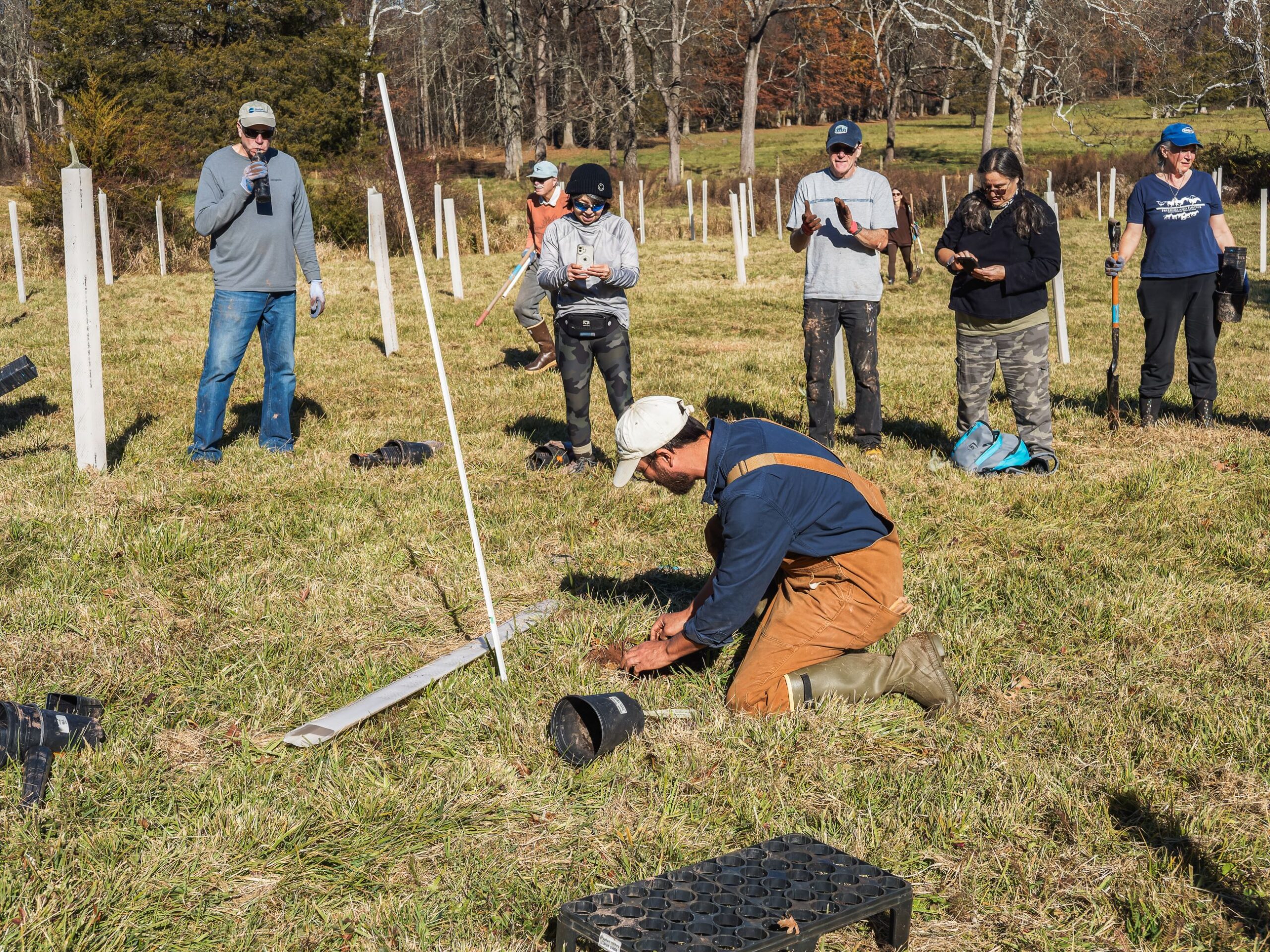
Robert Lucas planting the 10,000th tree
The project benefited from roughly 2,000 volunteer hours contributed by more than 200 individuals from area communities.
The 10,000-tree effort began in 2021, when Raritan Headwaters received a $525,000 grant as part of a larger restoration project to address environmental damage at a Superfund site in South Plainfield. Tree plantings across the watershed began in 2022.
RHA was selected for the grant by the Natural Resource Trustees overseeing a $25 million-plus Raritan River Watershed restoration to address environmental damage at the Cornell-Dubilier Superfund site. The Trustees have worked with more than 150 local partners, including Raritan Headwaters and other nonprofit conservation groups, to restore water resources, improve wildlife habitats, and expand recreational opportunities.
Forests are a major contributor to water quality in the Upper Raritan watershed. Trees shade river and stream corridors, keeping water temperatures cool and providing better habitat for trout and other aquatic species. Trees help stabilize stream banks, absorb and slow floodwater, and remove sediments and other pollutants from stormwater runoff. They also act as natural air filters, absorbing carbon dioxide and releasing oxygen into the air.