Units: (mm)
Water depth is the measurement of the distance between the surface and the bottom of a waterbody. Water depth can be used to calculate discharge or “flow” in cubic feet/second (CFS). Discharge is calculated by developing a graph of the relationship of depth to volume and then comparing depth measurements against this graph. Our project partners at Stroud are working on a display to show discharge as well as depth. Depth of a stream location can also be telling of the inundation of stormwater and the resiliency of a stream to maintain average water levels. Peaks and falls in depth data—indicative of flashy floods—and the rate at which a stream’s depth returns to an average can be telling of a watershed’s resiliency in the face of severe storm events.
Units: (°C)
Water temperature is inversely correlated to dissolved oxygen concentration in the water (higher temperatures means lower oxygen), which affects the ability of fish and other stream organisms to survive and reproduce. Temperature also increases the rate of photosynthesis in plants and algae, as well as bacterial growth, which can further limit oxygen levels and at times increase the presence of toxins, parasites, and pathogens in the water. All aquatic organisms are dependent on certain temperature ranges for optimal health; in the Upper Raritan, our streams should be relatively cold and are typically home to sensitive species like trout. Temperature is primarily controlled by climatic conditions, influenced by heavy precipitation (rainstorms), snowstorms, and the amount of sunlight present, but can be impacted by human activities. Deforestation along streams and rivers limit the shading of water, making them vulnerable to heating by the sun.
A guide below that translates Celsius to Fahrenheit:
Link: Celsius to Fahrenheit conversion (°C to °F) (rapidtables.com)
| Temperature Ranges |
Descriptions |
| 0°C = 32°F |
water freezes |
| 10°C = 50°F |
Cooler water is needed for fish spawning and embryo survival |
| 20°C = 68°F |
Fish are potentially stressed |
| 30°C = 86°F |
Cold water fish cannot survive |
(specific conductance)
Units: (µS/cm):
Conductivity is a parameter that measures the ability of water to pass an electrical current. Conductivity in water is affected by the presence of inorganic dissolved solids such as chloride, nitrate, sulfate, and phosphate anions (ions that carry a negative charge), or sodium, magnesium, calcium and iron cations (ions that carry a positive charge). Road salt, fertilizers, septic systems and wastewater treatment discharges are major sources of dissolved ions. These generally increase after precipitation or with snowmelt as heavy runoff enters streams. This measurement can also be affected by temperature, the warmer the water, the higher the conductivity. At specific conductance levels above 235 µS/cm, trout and sensitive macroinvertebrates such as mayflies, stonefiles and caddisflies are negatively impacted.
Units: (°C)
The logger temperature is the measurement of temperature inside the sensor unit. Electronics can be affected by temperature, so we use this to determine whether the sensor is being influenced by the weather. Water temperature and logger temperature are displayed on the same graph.
Units: Voltage
The climate stations are powered by multiple power resources, including solar panels. The graph displays the measurement of how well the solar panel on the sensor station is charging the battery. This is used to help maintain the sensors and unit overall.

 As of May 6, our climate stations will no longer be streaming live data. We are currently evaluating the best way to continue monitoring these important sites and sharing climate information with the public.
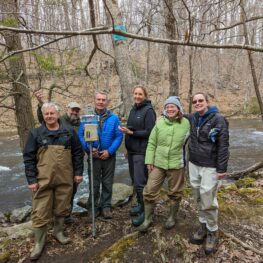 Raritan Headwaters Sentinel Climate Stations