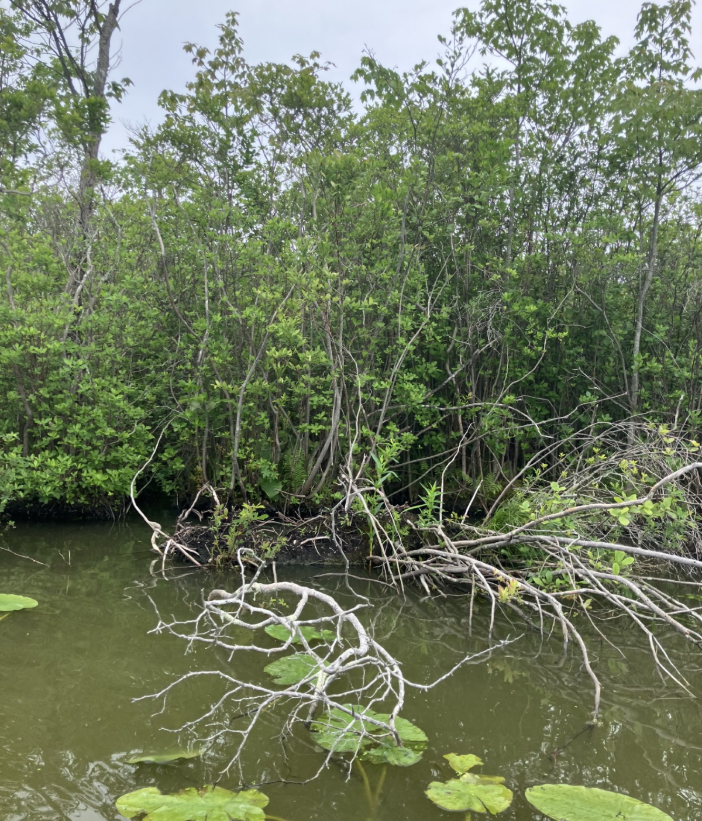
Photo taken by Claire Paul of Budd Lake bog
During a kayaking event on Budd Lake, an RHA staff member noticed something unexpected: a section of the bog along the northeastern shore appeared to be separating from the shoreline and sinking into the water. RHA Lake Research Technician Claire Paul, Watershed Scientist Benjamin Harris, and GIS Director Melissa Mitchell Thomas set out to determine whether it was an isolated event or part of a broader trend. Claire’s article recently published in NALMS’ LakeLine takes a closer look.
At 374 acres, Budd Lake is the largest naturally formed lake in New Jersey and the headwaters source of the South Branch Raritan River, which feeds the Spruce Run and Round Valley Reservoirs and supplies drinking water for approximately 2 million people.
Along its northern shore lies something rare: a Sphagnum-dominated peat bog, one of only a handful of such ecosystems in the glaciated portion of New Jersey. This wetland supports a black spruce forest, carnivorous pitcher plants, and a network of associated species.
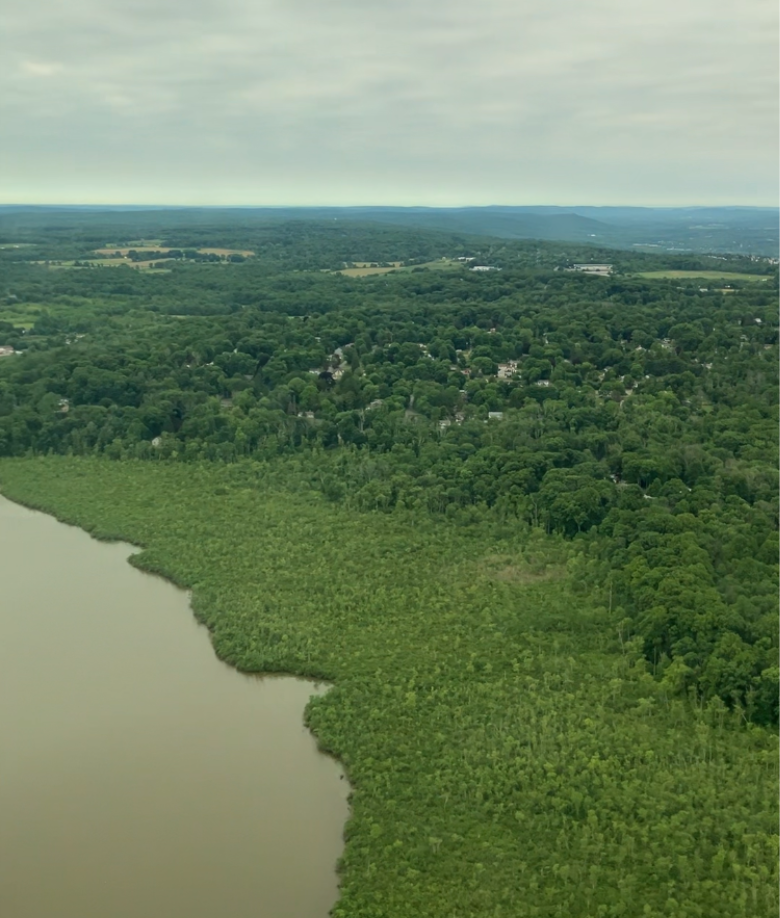
Photo taken by Claire Paul during NJ DEP Coastal Lakes Monitoring flight
Using aerial imagery from 1930 and 2020, Claire analyzed changes in the bog’s shoreline at nine sites around the lake. All but one site showed measurable recession over the 90-year period, with the greater loss occurring near the two northernmost lake-feeding tributary outlets, areas subject to both wave action from the lake and streamflow from incoming tributaries. Overall, the bog has lost more than 200,000 square feet of area, approximately the size of 3 ½ football fields.
The findings point to a combination of pressures: physical erosion, decades of nutrient buildup, and runoff from the surrounding watershed, all to which a Spaghnum bog is sensitive. The bog plays an important role in filtering nutrients, storing carbon, and supporting biodiversity, but as it continues to decline, so too does its ability to perform these functions for the broader watershed.
For a lake already hosting persistent harmful algal blooms, that adds another layer of concern, and underscores why understanding these changes is a critical first step toward restoration.
This research is part of RHA’s larger baseline study of Budd Lake, commissioned by Mount Olive Township. Knowing not just that the bog is declining, but where and why, is what makes targeted action possible.
To read Claire’s full findings, including her methodology, data, and initial restoration recommendations, view the article here.