Anglers recently lined the banks of the South Branch for Opening Day of trout season. It’s one of those moments that reminds me how much this river means to people: early mornings, familiar stretches of water, and a shared connection to place.
If you’ve spent time along the South Branch, you know it’s something special. What’s encouraging is that this isn’t just a local perspective. The river has been recognized as a Priority Water by Trout Unlimited, a national designation that highlights rivers with exceptional trout habitat and strong opportunities for long-term protection and restoration. For me, that recognition reinforces something we’ve been working toward for years: protecting clean, cold water at its source.
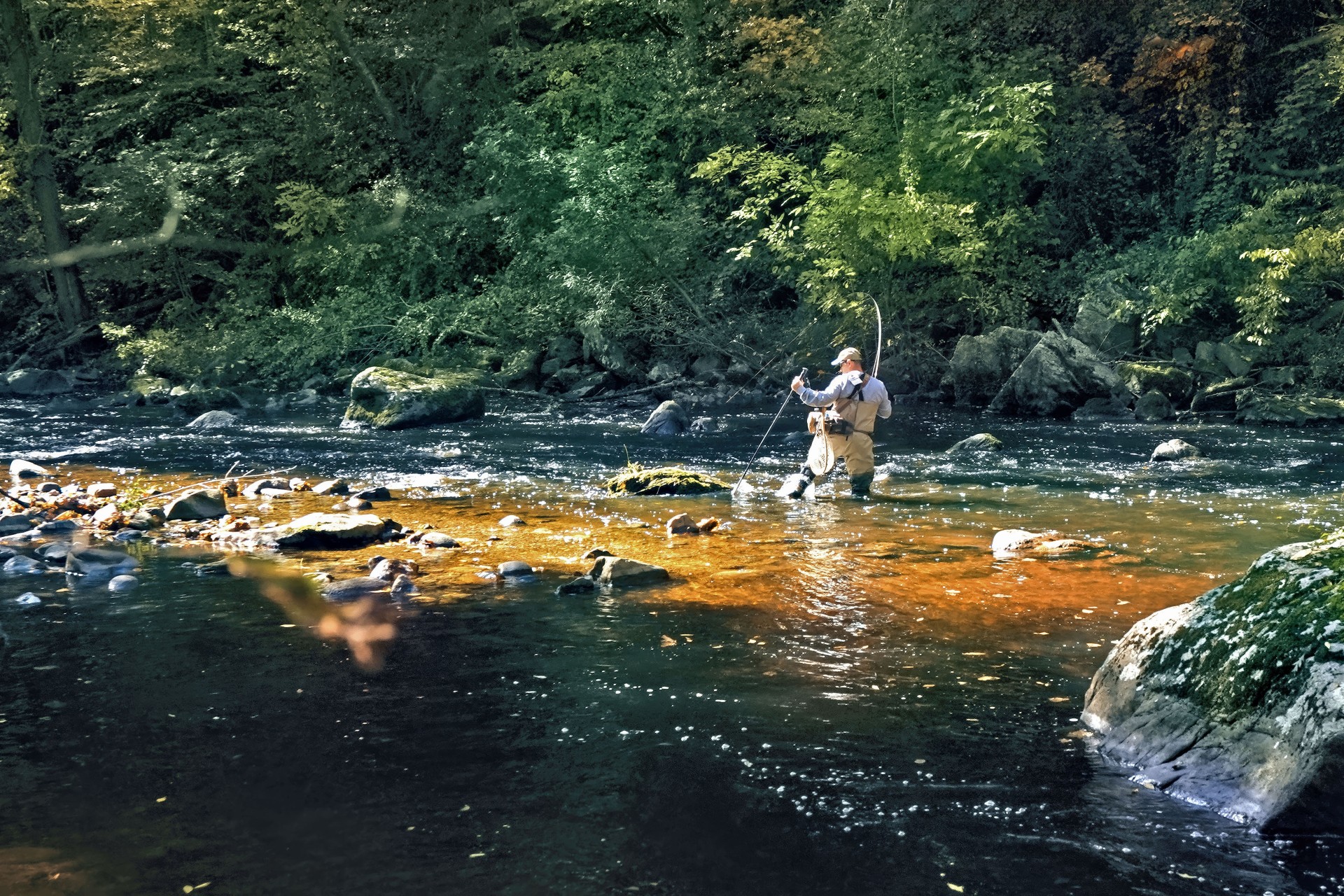
Photo by Sandy Rathborne, Ken Lockwood Gorge, South Branch Raritan River
The South Branch is one of the most intact and ecologically significant river systems in New Jersey, but like many headwater systems, it’s also quietly vulnerable to changes in land use, stormwater pressures, and warming temperatures. The same conditions that support a healthy trout fishery — cold groundwater inputs, forested buffers, and connected stream corridors — are also what protect drinking water for hundreds of thousands of people. That overlap is where our work at Raritan Headwaters Association aligns so naturally with Trout Unlimited.
One of the most important aspects of a healthy river system is something we don’t always see: connectivity. Trout and other aquatic species depend on the ability to move freely, seeking out cold water refuges, spawning habitat, and seasonal resources. When that movement is blocked, the system becomes fragmented. Restoring free-flowing conditions has become an increasingly important focus of our work, and it’s a shared priority with Trout Unlimited.
Here on the South Branch, RHA is working with federal, state, and local partners to remove five dams that obstruct fish migration and impair water quality. Among the most significant opportunities is the removal of the Rockafellows Mills Dam. As the downstream-most barrier to fish migration on the South Branch above its confluence with the main stem Raritan, its removal would reconnect miles of high-quality habitat. It’s a complex project, but one with enormous ecological upside, improving fish passage, restoring natural sediment movement, and strengthening the overall resilience of the river.
We’ve long had a close working relationship with Trout Unlimited, and it continues to deepen in meaningful ways. Many of you, our donors, volunteers, and community scientists, are also part of the TU community. That overlap matters. It creates a shared sense of purpose and helps translate science and restoration work into broader public understanding and stewardship.
In the coming weeks, RHA is meeting with regional Trout Unlimited staff to begin shaping a strategic action plan for the South Branch Raritan. Trout Unlimited has asked RHA to help identify the most pressing needs of the watershed and think through how conservation efforts can be most effectively directed going forward. It’s an opportunity to align priorities, build on the work already underway, and take a more coordinated approach to protecting this designated Priority river system over the long term.
For RHA, this is exactly where we want to be, at the table helping shape regional conservation strategy and ensuring that headwaters protection remains central to the conversation. It also reflects the strength of the community you’ve helped build. Our role in these discussions is grounded in decades of monitoring, advocacy, land stewardship, and education — work that you have made possible.
If you’d like to explore this work more deeply, Trout Unlimited has a dedicated webpage highlighting its efforts right here in New Jersey.
The South Branch’s designation as a Priority Water is both a recognition and a responsibility. Many of our cold water streams are already near their temperature limits, making groundwater inputs, forested buffers, and stream connectivity essential for their future. We have an opportunity to be proactive, to protect what’s working well, restore connectivity where it’s been lost, and make thoughtful, strategic investments in the future of this river.
As always, I’m grateful to be doing this work alongside all of you.